On December 15th, 2025, Nenko Gantchev, a Bulgarian born US-resident, became the 32nd person to die in an Immigration and Customs Enforcement (ICE) custody in 2025 alone. He was the last to join a succession of captives from around the world who were murdered by ICE – from Ukraine to Mexico and Honduras to China and Pakistan. The large majority of these people were young, with no criminal convictions and many of which had already spent decades in the US.
Nenko was 56 years old and diabetic, and it is likely that his death resulted from inadequate treatment of this condition while in detention. His family have since revealed that Nenko was officially granted a green card one day after he was taken into ICE-custody and that it was due to a series of bureaucratic hurdles that he was kept in detention for over two months regardless.
ICE’s website refers to Nenko as a “criminal illegal alien from Bulgaria”.
Journalistic pieces describe him as a “longtime Bulgarian Chicago business owner”.
I am staring at these two lines – at the stinging succession of adjectives and qualifiers in each of them – and I find myself yet again at a loss for words. I try and fail to find words that would lend dignity to Nenko’s death and do justice to his life. That would turn the necessity of recounting the circumstances of his murder into a space of mourning, and grief, and anger. I turn to Mahmoud Darwish:
I do not know the stranger, nor his accomplishments…
I saw a funeral, so I walked behind the coffin,like the others, bowing my head in respect.
I found no reason to ask: who is this stranger?
Where did he live, and how did he die,
because the causes of death are many,
one of which is the pain of life.
I don’t know if we can ever learn to walk behind the coffins of strangers, but I know that our reasons to ask of these strangers are multiplying by the hour. What follows is a conversation with JR, a comrade based in Michigan and organising with No Detention Centres in Michigan, in an attempt to infuse that necessary space of mourning with the possibility of solidarity and revolt.
Neda dVERSIA/Plan C
Neda: On Monday 15th of December, 56-year old Bulgarian national Nenko Gantchev was found dead in his cell in the privately run North Lake Processing Center in Baldwin, Michigan. JR, you are part of No Detention Centers in Michigan, a coalition that works to abolish such immigration detention centres in Michigan and beyond. When Cam first reached out, they wrote that you want people in Bulgaria and in the Balkans to know that no one is immune to Trump’s ‘senseless xenophobic violence’. How did you first hear about Nenko’s death and what do you know about the circumstances around it?
JR: It was within a few days of Nenko’s passing that we first started to hear reports from people detained at North Lake that someone had died. Over the last couple of months, we’ve been making connections with more and more immigrants held at this facility, and our friends from other Michigan groups like Raíces Migrantes have been in touch regularly with people in captivity there. From the fall into the early winter, there were increasing accounts of inadequate medical care at North Lake and rumors of outbreaks of several infectious diseases. We knew these rumors to be sadly consistent with the recent history of this prison in Baldwin, where multiple people had died in 2020 at the early height of the COVID-19 pandemic. On Thursday, December 18th, it was confirmed by someone at the office of Representative Rashida Tlaib—who had just conducted an oversight visit on December 5th, partly in response to the recent rumors of outbreaks—that ICE had notified Congress of Nenko’s death. News stories started to come out later the same day.
ICE and the GEO Group followed their usual procedure and sought to minimize the significance of this death at their hands, stating that all the signs pointed to “natural causes.” But we know that this was one of at least four deaths that took place in ICE captivity in the span of four days, at the end of the deadliest year for people held by ICE since 2004. On November 1st, the Day of the Dead, we had held a vigil in Grand Rapids and joined other groups around the country in honoring the 25 lives that had been lost to ICE’s abuse and neglect so far in 2025. We participated in this national day of action because we know there is nothing natural about the heightened vulnerability to premature death in this system. ICE has been a death-making institution since its founding in 2003, and Nenko’s life is now one of over 30 claimed by ICE since the beginning of Trump’s second term.
Petar: Can you elaborate on what you mean by ‘xenophobic violence’? Media reports across Europe on Trump’s use of Immigration and Customs Enforcement (ICE) emphasise the racial and ethnic element of violence waged against migrants in the USA – that people who visibly do not fit the MAGA understanding of an ‘American’ are the main target of this policy. Is this broadly correct?
JR: Without question. In a ruling from September of this year, following the campaign of terror that ICE had been waging against the working people of Los Angeles, the U.S Supreme Court affirmed that ICE agents had the right to consider a person’s race, spoken language, and accent as relevant factors in deciding whether to question or detain them. Many sources accurately described this decision as an effective legalization of racial profiling, and it received substantial media attention, along with the ubiquitous ad campaigns launched by ICE in the past year which have more and more obviously relied on a visual language of racist nostalgia and white supremacy, pairing images of mid-20th-century white suburban life with slogans like “Defend the homeland,” and so on. But it’s important to understand that these open manifestations of racism in 2025 only deepen and solidify a white nationalist agenda that has been in place since the federal government established ICE as a new agency in the early days of the so-called Global War on Terror. For two decades, during both Republican and Democratic administrations, ICE has functioned as a potent weapon against the immigrant working class. They have detained and deported millions of people deemed to be threats against an American “homeland” founded on genocide and racialized dispossession. Trump’s unabashed embrace of reactionary white nationalism has made it harder to ignore this reality.
The murder of Renee Nicole Good by an ICE agent in Minneapolis this month, and the torrent of homophobic rhetoric from the American right that has accompanied this killing of a lesbian woman in front of her partner, also underscore the gendered dimension to the category of “people who visibly do not fit the MAGA understanding of an ‘American,’” as you noted, whose lives are threatened by ICE’s authoritarian sadism.
Neda: It seems like Nenko was detained in the context of ‘Operation Midway Blitz’ – a campaign during which the ICE intensified their terror against immigrants in Chicago and detained thousands of people. Even the name that they chose for this ‘operation’ is telling for its fascist character, as it is apparently meant to evoke the Blitz campaign during the Second World War led by the Nazis. Can you explain a little bit more about the context that turned Chicago into a target for ICE? And what was people’s response in the Chicago area and elsewhere in the US like?
JR: The Trump administration has of course made mass deportation a central part of its program, and the budget bill that Trump signed into law in July made ICE the largest law enforcement agency in the country. Even before he took office a second time, Trump’s border czar Tom Homan had told a crowd of Republicans gathered in Chicago in December 2024 that the deportations would “start right here in Chicago.” ICE has targeted Chicago because it represents a major urban population in the Midwest from which people could be snatched to fill beds at newly reopened facilities like North Lake (which has been the detention center holding the largest number of immigrants taken during this time). And Trump has long exhibited an obsession with crime in urban centers, and in Chicago in particular. In the past year he has repeatedly attacked Chicago for its sanctuary policies and for its recent abolition of cash bail, which was the hard-fought result of an eight-year campaign by the Coalition to End Money Bond. Two weeks before the start of this ICE operation, Trump had signed an executive order targeting jurisdictions that had pursued bail reform and specifically threatening action against Chicago if the system of money bond was not reinstated. I think this conjunction points toward the overlap between the immigration detention system and the criminal punishment system, and to the ways in which both function as weapons against the working class.
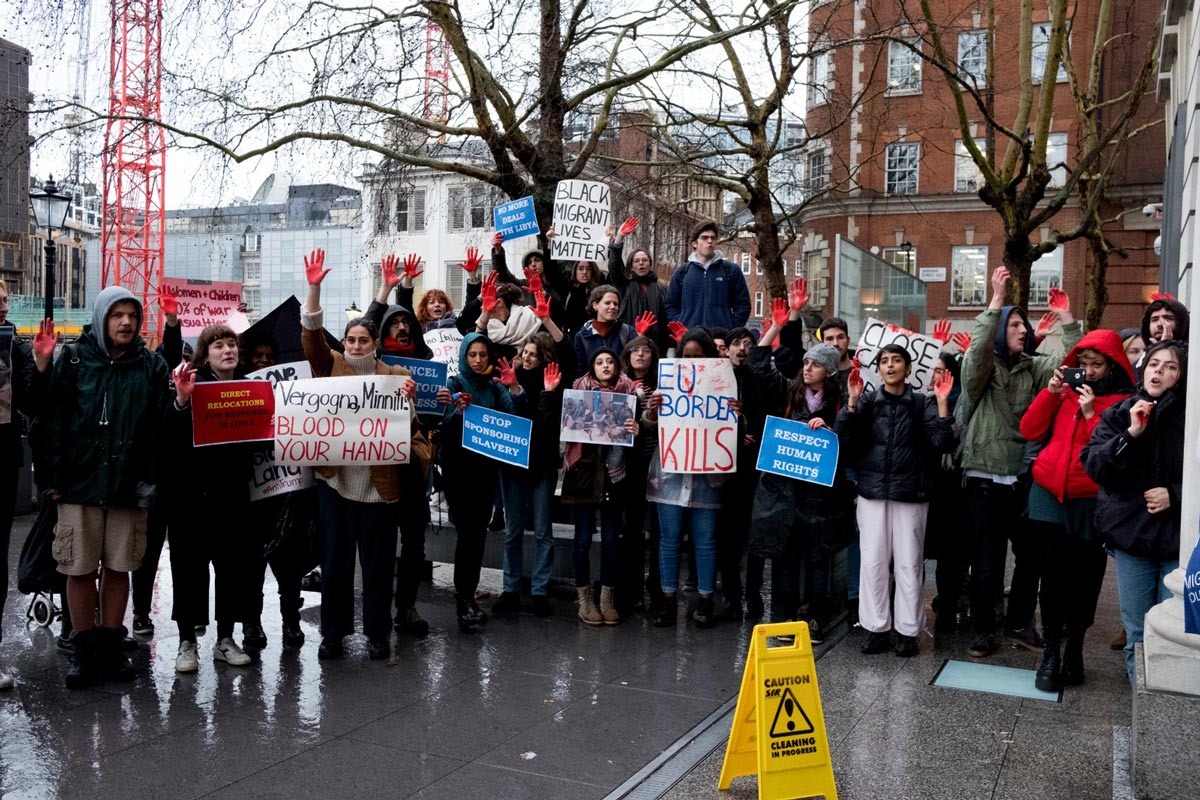
When ICE launched its fascist operation in the fall, the people of Chicago responded with beautiful and heartening displays of solidarity and community defense. Demonstrators outside the notorious Broadview ICE facility embraced a diversity of tactics, bringing together a broad range of people and approaches to expand an oppositional presence that has been sustained at Broadview since 2006. Community members have set up patrol groups, handed out whistles to help warn one another of ICE activity, and organized their own informal bus systems to get children safely to school. The Illinois Coalition for Immigrant and Refugee Rights has been doing wonderful work running a hotline that immigrants can call for multiple forms of support: 855-435-7693.
Stretching outside Chicago into Michigan and beyond, the response to ICE’s assault has also involved the organization of transportation networks to help get people home if and when they are released from detention. Building our capacity to help transport immigrants from North Lake back home to Chicago has been one of our coalition’s central tasks over the last three months. It’s worth noting that we first approached this project with the expectation that an October judicial order relating to the Castañon Nava consent decree would result in the swift release of a large number of people, starting in November, who had been taken by ICE from the Chicago area without warrants. We were expecting and hoping that almost 200 people held at North Lake would be freed all at once.
This group would have included Nenko Gantchev. Sadly, an appeals court delayed this mass release in November and then put it on hold last month. So I would emphasize that if the courts had made different decisions regarding Castañon Nava, Nenko could still be alive today: his blood is on not only ICE’s and GEO’s hands, but on the courts’ hands as well. Thankfully, though, even without the mass release that we’d anticipated in the Castañon Nava case, there has recently been a steady flow of immigrants released from North Lake thanks to the hard work of attorneys filing habeas corpus petitions on a case-by-case basis.
Neda: The narrative by the Department of Homeland and Security is that they are targeting immigrants with criminal background. Though cases like Nenko’s, who has never been charged with a serious crime and reportedly only has traffic violations, show very clearly how insubstantial this narrative is – even if we were to accept its legitimacy in the first place. It seems as though being a migrant itself is the greatest of all crimes for which the punishment is incarceration and death. I am really worried that UK, the country I live in, seems to be taking its cues directly from the US – but such narratives that link migration and criminality are of course not limited to these places.
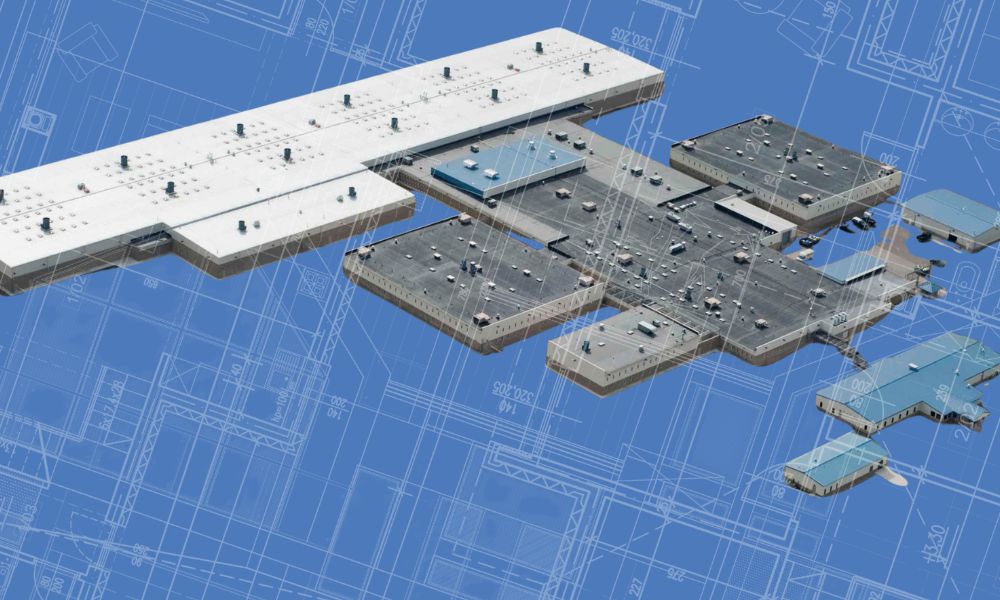
JR: I would certainly agree that at the heart of this expansion of the detention and deportation machine is the criminalization of migration itself, and I would also stress the importance of pushing back against, as you mention, the legitimacy of this framework of criminality in the first place. I think the particular history of the North Lake facility in Baldwin speaks to the need to question these narratives. The GEO Group first built North Lake in the late 1990s as a youth prison, at a moment when popular discourse in the United States—propped up by both Democrats and Republicans—claimed that the country was falling victim to a huge wave of “superpredators,” young people with no conscience who would commit violent crimes without remorse. In other words, this is a facility whose origins are inseparable from a deeply racist discredited narrative—it should never have been built in the first place.
Since its first opening, North Lake has closed and reopened four times. Most recently, between 2019 and 2022, it was a federal immigrant-only prison, incarcerating people who were not U.S. citizens and who had been convicted of federal crimes. Our coalition recognized in 2019 that it was important to organize against this iteration of the prison, and in support of the people held inside, even though we understood that it was not, at that time, an ICE detention center. First, we knew that the history of this kind of facility—our national partners at Detention Watch Network call them shadow prisons—was tied to a huge increase in the number of federal prosecutions, including the prosecution of people specifically for the act of reentering the country without so-called authorization. (In other words, in many cases, migration itself was the federal crime of which people were accused.) And, second, we were coming from an abolitionist perspective and so we believed that incarcerated people as such needed support.
Detention Watch Network’s executive director, Silky Shah, among many others, has written powerfully about the need to situate the struggle against immigration detention within a broader abolitionist perspective, and about the pitfalls of relying on the argument that “immigrants are not criminals.” It is deeply understandable that people would use this language—and as Silky says, “it is a real challenge for us as a movement, because, yes, you want to point out that ICE is rampantly targeting people who might not be a ‘priority,’ but at the same time, the way these systems work is to expand the scope of who can be considered criminal.”
Neda: Do you know anything about how ICE and its subcontractors work on an inter-state level? It seems that Nenko was detained when he showed up for a green card interview in Chicago, Illinois, back in September, and he was then moved to a detention centre further north in Baldwin, Michigan. Does moving detainees across state borders happen often and what does it mean for their relatives and close ones?
JR: It is unfortunately very common for people in immigration detention to be taken hundreds of miles away from their families, and in the past six months we have been directly involved in several cases where immigrants have been shuffled around the country—sometimes being told they were about to be deported, taken to staging areas near the southern border, and then ultimately ending up back in Michigan. Just looking at the example of the Chicago operation in which Nenko was kidnapped—The Marshall Project published a report on 1,600 affected people, who were sent out to a range of detention centers in 13 states around the country, from Michigan to Louisiana to New Mexico.
As you can imagine, this experience is devastating and terrifying for families who sometimes have no idea where their loved ones are being held. ICE’s online locator is often no help. It also means that the transportation network I mentioned above has had to adapt and link up with other such groups around the country to help get people back home, whether by plane, train, bus, or car. So these experiences have forged cross-regional solidarity amid awful circumstances.
Neda: The North Lake Processing Center in Baldwin is the largest detention facility in the Midwest in the USA. It is owned by GEO Group, a corporation that runs dozens of such facilities in the country and beyond and stands to profit approximately $1 billion from a 15-year contract by ICE, according to their own estimates. GEO Group exists since the 1980s, whereas, as you explained the North Lake Processing Centre was previously a prison that had been closed down. Can you say something about the legal and historical conditions as well as the pre-existing infrastructures that afforded the intensification of violence against immigrants during Trump’s administration?
JR: The partnership and close cooperation between the federal government and private companies like GEO, whose executives swoon over the “unprecedented growth opportunities” presented by Trump’s plans for mass deportation, has been an essential component in the production and intensification of this anti-immigrant violence. Over 90 percent of immigrants in ICE captivity are held in privately run facilities. Silky Shah’s book Unbuild Walls: Why Immigrant Justice Needs Abolition offers an indispensable history of the origins of these partnerships in neoliberal policy and the prison boom of the late 20th century.
And at a moment when Nenko and so many others in ICE’s dungeons—and now Renee Good, and Keith Porter in Los Angeles, and others around the country—have fallen victim to ICE’s unchecked ruthlessness, I believe it remains as important as ever to remember that this agency’s growth has been the product of Democratic and Republican lawmakers’ efforts together. Barack Obama earned the moniker “Deporter in Chief” by forcibly removing three million immigrants, more than all the U.S. presidents in the 20th century combined. When Joe Biden signed an executive order to end the Department of Justice’s use of private prisons—leading to the temporary closure of North Lake and other immigrant-only Bureau of Prisons facilities—immigrant advocates warned at the time of his administration’s failure to include the Department of Homeland Security in this order, as he had promised to do during his campaign. As a result, there was a pattern of facilities like North Lake reopening as immigration detention centers which began during the Biden administration. And Kamala Harris followed in Biden’s footsteps with the catastrophic decision to attempt to run to the right of Trump on immigration in 2024, accepting at face value right-wing rhetoric on the need for border enforcement and refusing to provide a genuine alternative to this regime of dehumanization, displacement and death.
Neda: So what can we describe as ‘new’ about what’s happening right now in the USA?
JR: I’m reflecting on these questions at a moment when Trump’s second administration is invading Venezuela to kidnap a sitting president, threatening additional imperial expansion into Greenland, and defending and extolling the innocence of ICE agents as they execute people in the street. I think we have to be attentive to the new brutalities that Trump’s regime represents, and also to the reality that so much of what is new is a matter of intensity, scope, and visibility. ICE and the GEO Group killed Nenko Gantchev, fundamentally, because killing people is what U.S. prisons do and have always done. The incursion into Venezuela—though it may have been carried out with an unusual transparency in terms of the obvious goals of imperial expansion and resource extraction—also marks the continued pursuit of those goals as the basis of U.S. policy toward Latin America, and justifies itself with self-conscious nostalgia for the Monroe Doctrine. Jonathan Ross of ICE shot and killed Renee Good a mile away from where Derek Chauvin of the Minneapolis Police Department suffocated George Floyd five and a half years before.
I would personally note that it is impossible for my experience of current events in the U.S. to be unaffected by the comprehensive destruction of Gaza over the last two and a quarter years, by the bipartisan U.S.-backed campaign to annihilate the people, history, and culture of Palestine. ICE is working in the live shadow of the most widely documented genocide in the history of the planet. As Columbia protester Leqaa Kordia continues to languish in a Texas detention center, and as Israel continues to impose deliberate starvation in Gaza and to carry out new airstrikes in defiance of the proclaimed ceasefire, I think here about what Dylan Saba wrote, a year before Trump took office, on the condition of Palestine as the condition of the world: “What we are witnessing in Gaza—a resource-deprived, stateless population pushed to the absolute limits of desperation in a violent confrontation with an advanced military power intent on excluding as many noncitizens as possible—is as likely to be a vision into the future as a reminder of the past.” In this sense, if we are aware of new elements in what is unfolding or unleashed now in the U.S.—the full import of which may not be grasped until later—I see this awareness as necessarily linked to the recognition that we are all living in the immediate wake of the holocaust of Gaza.
Neda: Thank you, these are really powerful, thought-provoking and also saddening words – I know they ring through to not just me. No Detention Centers in Michigan is a coalition that aims to abolish detention centres and the incarceration of immigrants. How does your work look in practice: how do you organise, what do you do to support people and abolish the carceral regime?
JR: The NDCM coalition was first formed in 2019 in opposition to a proposal for a new detention center in Ionia, Michigan. Twice in a row, in fact—in 2019 and then again in 2020—the coalition was successful in actually preventing an Ionia facility from opening. In those cases we were able to organize community opposition—through local events and mobilizing turnout to government meetings—on a scale that stopped ICE and their partners in their tracks.
The GEO Group’s prison in Baldwin and its use by the detention and deportation apparatus have unfortunately been harder to fight, because GEO has so effectively embedded itself in Lake County, one of the poorest counties in the state. GEO owns all the land and there are fewer opportunities to resist on the level of zoning ordinances and so on. As long as North Lake remains open, though, we will do everything we can to support the people held inside—documenting the abuses they have endured, amplifying their demands, joining with our national partners to continue pushing for the release of everyone in ICE custody, and helping with transportation and other post-detention needs for everyone who is released.
Neda: Which groups form part of this coalition? Are there any other issues, organisations or sites of struggle that you see as being particularly aligned with the fight you are engaged in?
JR: NDCM has seen itself from the beginning as a broad coalition, willing to foster solidarity and cooperation among many overlapping groups with the shared goal of ending immigration detention in Michigan and the United States. Different members of the coalition have their own tactical aims and can assist the struggle in various ways. The Michigan chapter of the American Civil Liberties Union, for example, has been a crucial partner in research and litigation. Local rapid-response networks like GR Rapid Response to ICE—who work in tandem with Cosecha Michigan—and Lakeshore Rapid Response to ICE are performing the essential day-to-day work of training immigrant communities and their friends to document and resist ICE’s assaults on our neighborhoods, building relationships that will continue even through prison walls when someone has been abducted and separated from their loved ones.
The coalition’s origins are also closely linked to Michigan Abolition and Prisoner Solidarity—because this is ultimately a fight for the abolition of all cages—and to the antifascist mobilization against white nationalists at Michigan State University in 2018. That was an important victory, and we see the struggle against prisons like North Lake as an antifascist struggle.
Petar: How can people in Bulgaria, particularly, and Europe, overall, best support the resistance to Trump and his policies?
JR: We seem to face a new reminder every day that Trump is nothing more and nothing less than the face of imperial capitalism in the twenty-first century. The preventable death in captivity of a Bulgarian American kidnapped from the streets of Chicago reflects a war against immigrants and freedom of movement which is inseparable from ongoing efforts to maintain U.S. hegemony from Venezuela to Gaza and around the world. So in considering European and Bulgarian resistance to the Trump regime, I would look to the words of the Palestinian revolutionary Ghassan Kanafani: “Imperialism has laid its body over the world, the head in Eastern Asia, the heart in the Middle East, its arteries reaching Africa and Latin America. Wherever you strike it, you damage it, and you serve the world revolution.”